

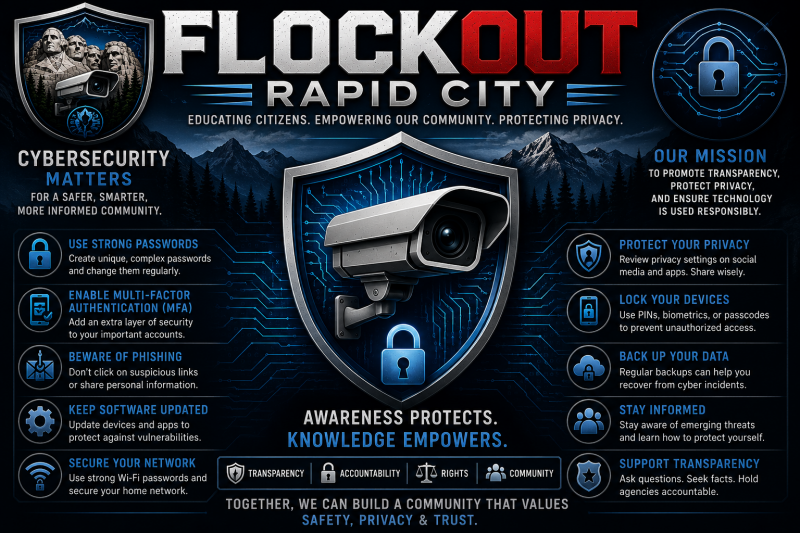
Cybersecurity Tips
Privacy Tips for Drivers: Protecting Your Personal Information in a Connected World
By FlockOut Rapid City
As technologies such as Automated License Plate Recognition (ALPR) become more common, many people wonder what they can do to better protect their privacy.
While license plates are designed to be visible on public roads, there are still many lawful steps you can take to reduce your overall digital footprint and protect your personal information.
1. Understand What ALPR Cameras Do
The first step is education.
ALPR cameras are designed to photograph license plates that are visible in public and convert the plate number into searchable text. They may also capture information about the vehicle, such as its color, make, model, and the time and location of the scan.
Knowing how the technology works helps you make informed decisions about your privacy.
2. Protect Your Personal Information Online
Your vehicle is only one part of your digital identity.
Help protect yourself by:
-
Using strong, unique passwords.
-
Enabling multi-factor authentication (MFA) on important accounts.
-
Limiting the amount of personal information you share publicly.
-
Reviewing the privacy settings on social media platforms.
-
Being cautious about posting your location in real time.
3. Be Mindful of Location Sharing
Many mobile apps collect location data.
Consider reviewing which apps have access to your location and whether they truly need it. When appropriate, choose settings that limit location access to only while the app is in use.
4. Protect Your Vehicle from Theft
Simple security measures can reduce the risk of vehicle theft and protect your personal information.
Consider:
-
Locking your vehicle.
-
Removing valuables from plain sight.
-
Keeping registration documents secure.
-
Using an alarm or other anti-theft devices if appropriate.
5. Learn About Local Policies
Many communities publish information about the use of ALPR technology.
Look for information such as:
-
Agency privacy policies.
-
Data retention practices.
-
Public meeting agendas.
-
Annual reports.
-
Opportunities for public comment.
An informed citizen is better equipped to participate in community discussions.
6. Ask Questions
Community engagement is an important part of transparency.
Questions you might ask include:
-
How is ALPR data protected?
-
Who has access to stored information?
-
How long is data retained?
-
What oversight exists?
-
Are systems regularly audited?
Constructive questions can help strengthen accountability and public trust.
7. Know Your Rights
Privacy laws vary by state and locality.
Understanding your state's public records laws, privacy protections, and local government policies can help you better understand how surveillance technologies are governed in your community.
8. Avoid Misinformation
Many claims about surveillance technology circulate online.
Before sharing information, look for reliable sources such as:
-
Government publications.
-
Court decisions.
-
Academic research.
-
Official agency policies.
-
Reputable news organizations.
Accurate information leads to better public conversations.
What You Should NOT Do
Some products and techniques claim to hide or obscure license plates or interfere with camera systems.
These methods may violate state laws, traffic regulations, or local ordinances and can create safety concerns. FlockOut Rapid City does not recommend altering, covering, or obstructing a license plate or attempting to interfere with surveillance technology.
Instead, we encourage lawful, informed participation in discussions about privacy, transparency, and the responsible use of technology.
Privacy Starts with Awareness
No single action can eliminate your digital footprint, but informed choices can help you better manage your personal information.
At FlockOut Rapid City, our mission is to educate the community about privacy, cybersecurity, and surveillance technology. By understanding how these systems work and engaging in respectful public dialogue, citizens can play an active role in shaping policies that balance public safety with individual privacy.
Knowledge Empowers. Awareness Protects.
Create Your Own Website With Webador